
Dickinson County Arrest Records and Charges
Dickinson County arrest records start on the law-enforcement and jail side. Sheriff J. Davis leads the sheriff's office identified in the research, and the sheriff or city police may create arrest, booking, custody, bond, and incident-related entries before a District Court criminal case is complete. The county inmate listing can show a person in custody, booking information, bond fields, arresting agency, and charge descriptions when a person has been booked into the Dickinson County jail. That booking record does not prove a conviction and does not always show the later prosecutor-filed court charge.
Court charges after arrest are a different layer. The prosecutor decides what charge to file, whether to amend or dismiss a count, and whether the matter belongs in District Court or municipal court. The Dickinson County Attorney prosecutes state-law and county-resolution violations, including felony and juvenile crimes anywhere in the county and misdemeanor or traffic violations outside city limits. City ordinance, city traffic, and some city misdemeanor cases may remain in Abilene, Chapman, or Herington Municipal Court.
The court record side runs through the Dickinson County Courthouse / County Building in Abilene, where Cindy J. MacDonald is identified as Clerk of the District Court. That clerk office is the source for District Court filings and copies, while the County Clerk is the researched countywide open-records intake point for county department records.
The jail and court paths meet when a booking charge becomes a filed case, but they should still be read as separate records. For a current custody search, use the jail roster. For filed charges, court dates, pleas, dispositions, and sentencing, use the District Court record path. For the full case file after charges are filed, use Dickinson County criminal court records.
Find Dickinson County Arrest Records
The arrest side of the search starts with the Dickinson County Inmate Listing when the person may be in custody or recently booked. The court-charge side starts with Kansas Judicial Branch Case Search and the 8th Judicial District docket PDFs. A person who appears on the jail roster may not yet have a mature court file, and a person with an old District Court case may not appear on the current jail roster.
- Check the Dickinson County Inmate Listing if current custody, booking date, bond, or arresting agency is the key question.
- Search Kansas Judicial Branch Case Search for filed District Court charges by name, case number, county, or case type.
- Use the 8th Judicial District docket page when the issue is an upcoming first appearance, motion, sentencing, or probation hearing.
- Contact the Clerk of the District Court if the case is public but the needed document or disposition is not visible online.
- Check municipal court channels if the incident is tied to city ordinance, city traffic, or city misdemeanor enforcement.
For sheriff or jail records not shown online, the researched county fee schedule says county open-record requests are submitted through the County Clerk, who routes the inquiry to the correct department. That is separate from a request for a District Court case document held by the Clerk of the District Court.
Dickinson Arrest Booking Fields
The researched inmate sample showed how a booking-side record can differ from a court charge record. Public jail detail fields can include the person's name, age, race, gender, height, weight, address city and state, aliases, booking date, release date, prisoner type, total bond, total bail, bond number, bond type, charge description, offense date, disposition, arresting agency, attempt or commit status, and bond link. The sample did not show a warrant number, court date, housing pod, judicial officer, statute code, release reason, or medical flags.
| Booking-Side Field | What It Means for Arrest Records |
|---|---|
| Booking date | The date the jail record started for the person in custody. |
| Arresting agency | The agency listed in the jail detail, such as a police department or sheriff-related agency. |
| Charge description | A jail-side description of the alleged offense. It may differ from later filed court wording. |
| Bond type and amount | Cash, surety, or other bond fields tied to release conditions when shown. |
| Disposition | A jail or charge-row status field, not always the final court outcome. |
| Release date | A custody field showing release from jail, not a dismissal of charges by itself. |
Because booking entries can appear before final court action, they should be paired with the District Court case record before drawing conclusions. A release from custody is not the same as a dismissal, and a charge description on a roster is not the same as a conviction.
Dickinson Court Charges After Arrest
A court charge record begins when the criminal allegation is filed in the proper court. In Dickinson County, the County Attorney handles state-law felony charges, juvenile crimes, county-resolution violations, and outside-city misdemeanor or traffic matters. Municipal prosecutors handle many city-level matters. A charging document identifies the accusation the court will track, and later entries show whether the charge is pending, amended, reduced, dismissed, resolved by plea, or tried.
| Charging Document | Who Files or Initiates It | How It Fits Dickinson County Court Charges |
|---|---|---|
| Complaint | Usually law enforcement or prosecutor action | Can begin a criminal case by alleging facts or an offense for court review. |
| Information | Prosecutor | A formal prosecutor-filed charge commonly used in Kansas criminal prosecutions. |
| Indictment | Grand jury | A formal accusation route for serious cases, less common in routine county charge tracking. |
The research did not identify a local Dickinson County public table of charge codes by statute. Use the filed court document, case entry, or clerk copy to confirm the exact charge wording, level, and status. One arrest can produce no filed charge, one filed count, several counts, or counts that change after first appearance.
Dickinson County Charge Status Table
Charge status matters because the first charge shown after an arrest may not be the final charge. Prosecutors can amend counts, plea talks can reduce counts, and the court can dismiss counts. Docket entries such as motion, status conference, bench trial, sentencing, and probation violation help show where the charge is in the court process.
| Status | Meaning in a Court Charge Record | What to Check Next |
|---|---|---|
| Pending | The charge has not reached final disposition. | Check the docket for the next hearing or order. |
| Amended | The prosecutor or court record changed the filed wording or count. | Compare the original charge with the current charge list. |
| Reduced | The charge changed to a lower or different offense level. | Read the plea, agreement, and final disposition. |
| Dismissed | The count or case was ended without conviction on that charge. | Confirm whether other counts remain. |
| Convicted | The record shows guilt by plea or trial result. | Read the sentence, probation, restitution, and later review entries. |
The statewide criminal-history screenshot assigned to this page comes from the Kansas criminal history record search portal.
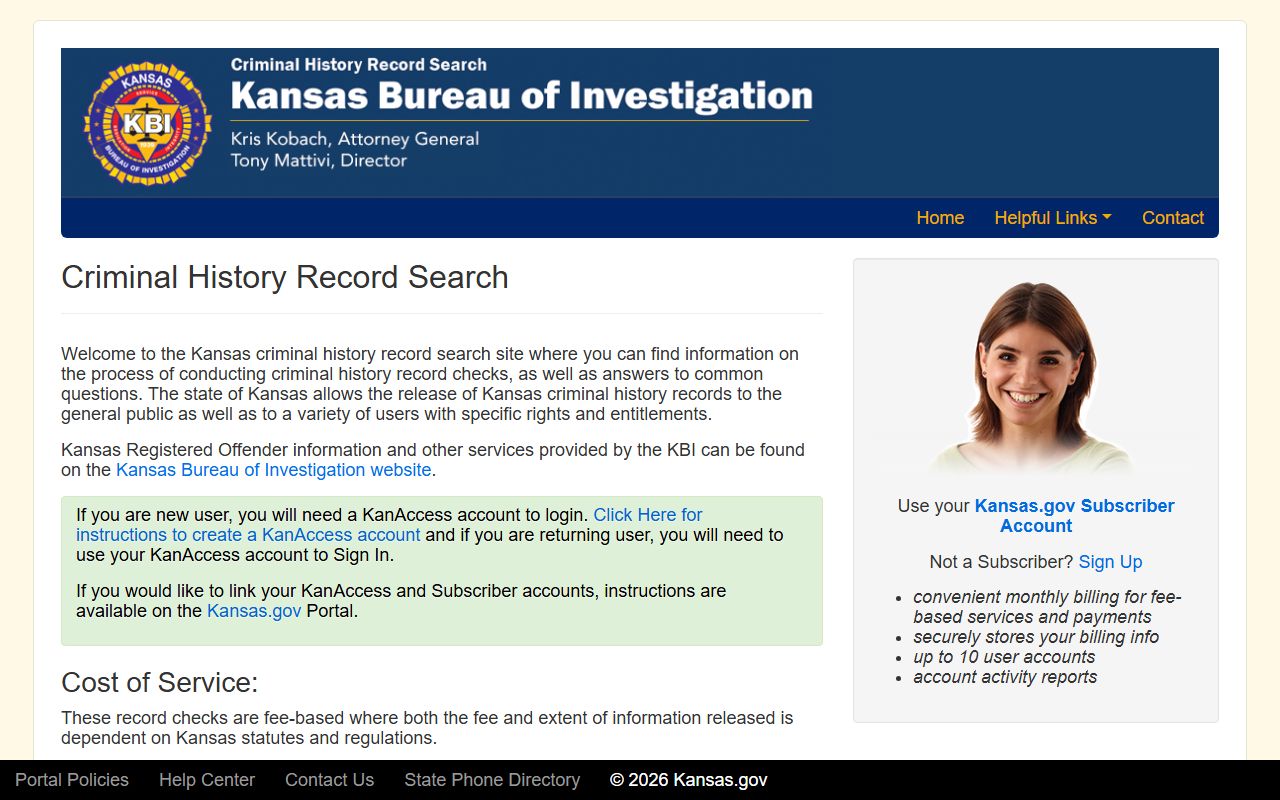
That source is a statewide history channel, while the court file remains the local source for filed charge status and case outcome.
Dickinson Charges vs Convictions
A charge is not the same as a conviction. Dickinson County arrest records may show a charge description soon after booking, and District Court records may later show a formal charge. Neither one means the person was found guilty. The conviction question depends on the disposition and sentence entries in the court record.
| Point of Comparison | Charge | Conviction |
|---|---|---|
| Record stage | Booking, complaint, information, or early case docket. | Disposition, judgment, plea result, trial result, and sentencing. |
| Proof level | An allegation or filed accusation. | A court result based on plea or trial findings. |
| Can be removed from the case | Yes. It can be dismissed, amended, or reduced. | Only later court action, appeal, or qualifying expungement changes access or effect. |
| How to verify | Read current charge status and docket activity. | Read the final disposition and sentence for each count. |
Public records can preserve both kinds of information. A person may have a visible arrest entry with no conviction, a dismissed court charge, or a conviction that later has an expungement order. That is why the status and disposition fields matter more than the mere presence of a name in a search result.
Dickinson Arrest Records by Court
Venue affects how charges after arrest are searched. District Court records are searched through CaseSearch, docket PDFs, and the Clerk of the District Court. Abilene Municipal Court, Chapman Municipal Court, and Herington Municipal Court are separate city-court channels for municipal ordinance, city traffic, and city misdemeanor matters. The Abilene court page states that the court manages records for all of its court cases and collects fines and forfeitures.
Federal charges are outside the Dickinson County District Court system. The District of Kansas, federal CM/ECF, PACER, the Bankruptcy Court for the District of Kansas, and the Tenth Circuit are separate court systems. A federal charge or federal appeal will not be a Dickinson County arrest-to-charge record just because the person lives in the county.
The federal filing screenshot in the manifest comes from the District of Kansas CM/ECF system.
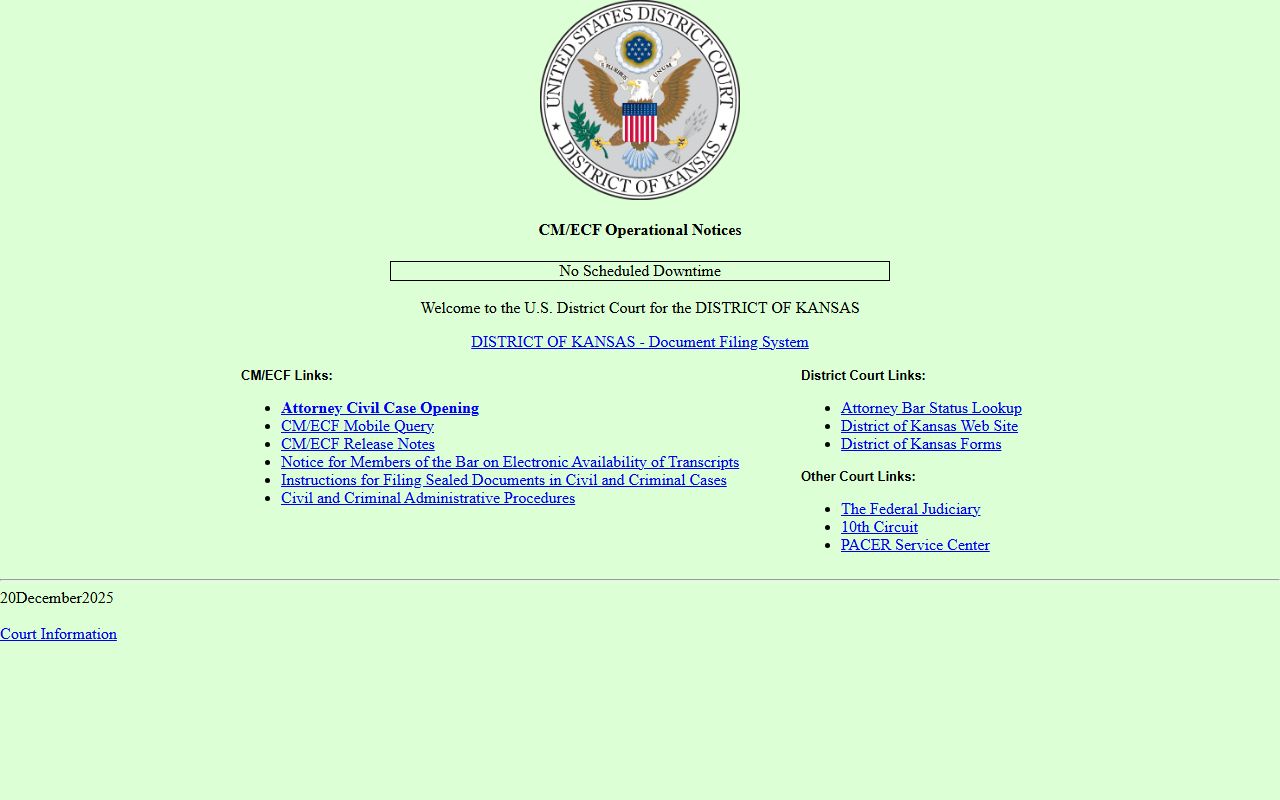
It illustrates why federal criminal filings belong in federal access systems rather than county District Court records.
PACER is another federal court access channel shown in the assigned image set from PACER federal court records access.
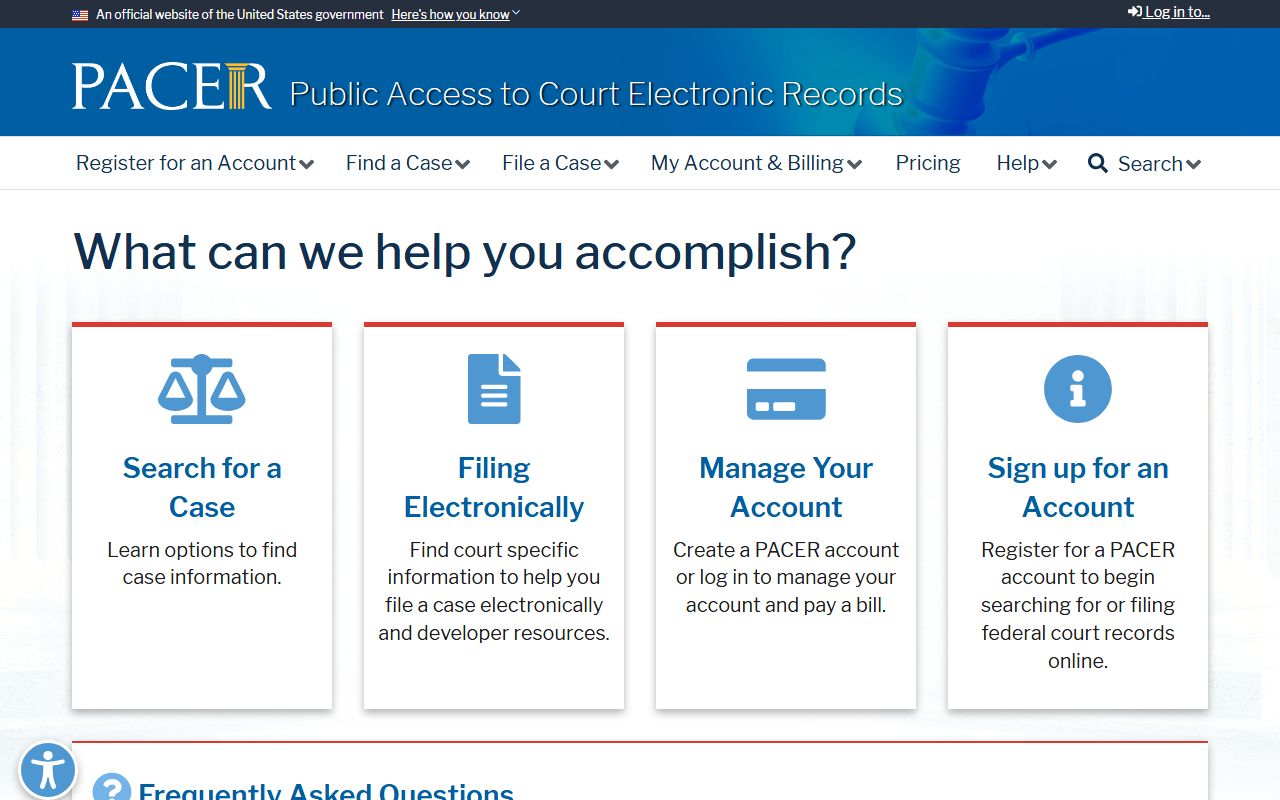
PACER can matter only when the charge is federal, not when the record is a Dickinson County District Court or municipal court charge.
Restricted Dickinson Arrest Records
Access limits apply to both arrest records and charge records. Juvenile offender records are restricted by Kansas law, and Dickinson District Court docket samples show sealed entries in protected categories. Adoption, care and treatment, mental-health, minor, protected-address, and some personal-identifying information may be withheld or redacted. A sealed entry in a public docket means the court is not displaying the protected details to the public.
Expungement is also relevant to arrest records and court charges after arrest. K.S.A. 21-6614 governs expungement of qualifying adult arrests, convictions, and diversions. When an expungement is granted, ordinary public access is limited, while courts, criminal justice agencies, the subject, and other statutory requesters may still have access under defined rules.
Important: Do not use a booking charge as proof of guilt. Confirm the court disposition and any later sealing or expungement order.
The appellate source image comes from the U.S. Court of Appeals for the Tenth Circuit.
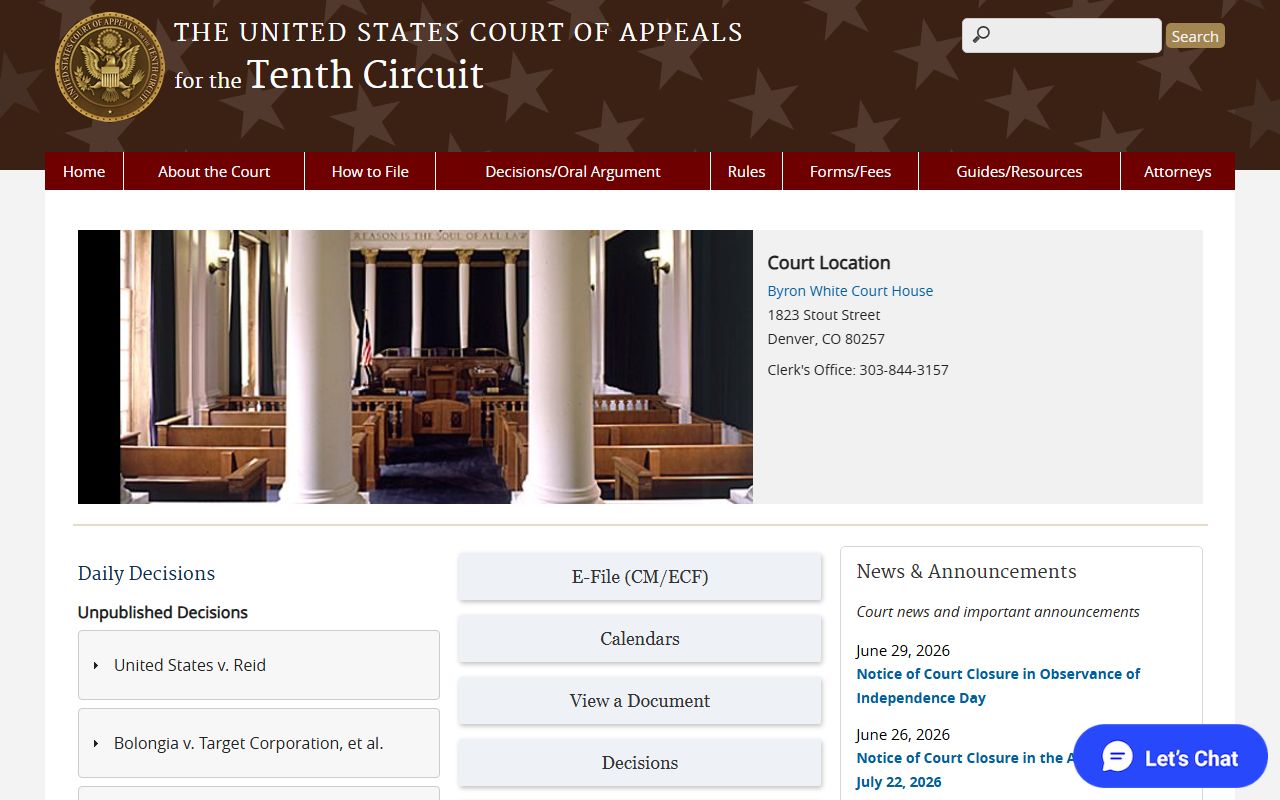
Appeals and federal records are distinct from county arrest and charging records, so the issuing court controls the access path.
Note: Kansas registered offender information is a separate state search channel and should not be treated as a complete arrest-record database.